

How to Transfer Photo Albums from iPhone to Mac
By Joakim Kling - Last Updated: | Contact Author
iPhone photos app groups photos under albums and categories, making it easy to manage and view photos. Transferring photos from iPhone to Mac by albums will retain those categories, so that you won't face thousands of photos all mixed together.
A telling example is screenshots and camera shots. Most of us certainly want to separate them. Screenshots can be a mess, with temporal screenshots we showed to a friend and forget to delete, or important screenshots of some documents, all mixed together.
If you are using Instagram, VSCO, snapchat and other photo sharing or edting apps, you will notice these apps create albums on iPhone in their own right. It would be nice to keep such album structure when importing photos to Mac.
Same goes to "favorites", where you keep all the best shots and pictures you like; and panoramas, animation/gifs, live photos, etc.
What is your scenario? Use Quick Navigation Here
Method 1: Transfer Photo Albums from iPhone to Mac using iCloud
iCloud Photos is Apple’s seamless, wireless way to keep your entire photo library, including albums, in sync across your iPhone and Mac. Once enabled on both devices (signed into the same Apple Account), your photos, videos, and albums automatically upload to iCloud and appear on your Mac in the Photos app. No cables, no manual selection of individual items for ongoing use.
Apple gives every account 5 GB for free. Most photo libraries grow past that pretty quickly. Paid plans start at $0.99 a month for 50 GB and go up from there. Check your storage first so you do not get stuck halfway through an upload.
To transfer photo albums from iPhone to Mac via iCloud, follow these steps:
Step 1: Enable iCloud Photos on your iPhone.
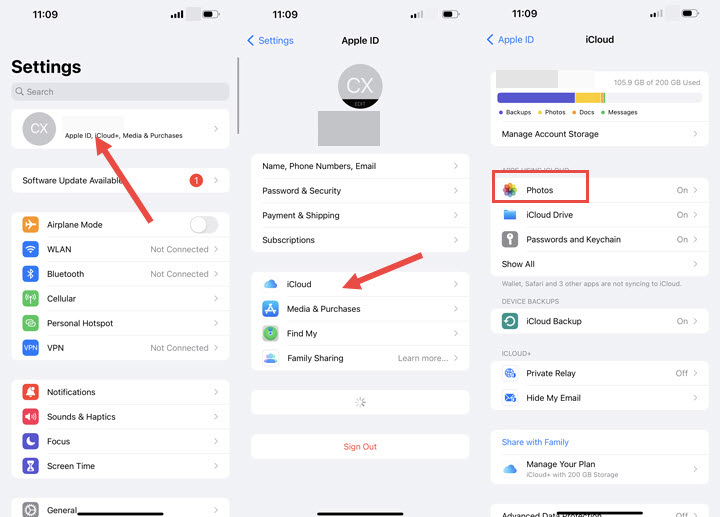
Go to Settings, tap your name, select iCloud, tap Photos, and turn on Sync this iPhone. Then, you can either choose Optimize iPhone Storage or Download and Keep Originals.
Your library will begin uploading over Wi-Fi. Keep the iPhone plugged in and connected to power for large libraries. You can monitor progress in the Photos app.
Step 2: Enable iCloud Photos on your Mac.
Open the Photos app. In the menu bar, choose Photos > Settings (or Preferences on older macOS versions). Click the iCloud tab. Select the checkbox next to iCloud Photos.
Alternatively, you can enable it via System Settings > [Your Name] > iCloud > Photos and turn on Sync this Mac.
Step 3: Wait for the sync and access your albums.
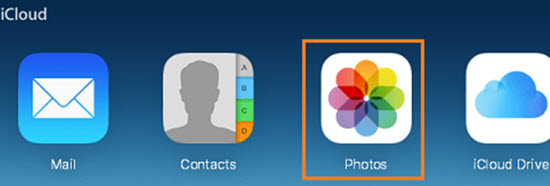
Once both devices are online and signed into the same Apple Account, photos and albums appear automatically in the Photos app on your Mac. You might see the following warning when the number of photos exceeds 1000 items; however, it will be fine if you stay within that limit.

Note: while regular custom albums sync perfectly, there are a few important limitations to keep in mind:
- • Smart Albums: If you make a Smart Album on your iPhone, it won't show up on your Mac. If you want it on your Mac, you have to manually copy those photos into a standard, regular album.
- • iCloud Shared Photo Library: The iCloud Shared Photo Library is designed to be one big pool of shared photos. It completely strips away any custom folder or album structures you made in your personal library. It only shares the flat stream of raw photos.
- • Storage limits can pause syncing: Syncing requires enough space on both your physical hardware and your cloud account. If your iCloud Storage limit is full, syncing will immediately freeze. If your Mac or iPhone runs very low on local device storage, background syncing will temporarily pause.
- • System Photo Library restriction: iCloud can only sync one photo library per Mac. If you have multiple photo libraries on your Mac, only the designated "System Photo Library" will sync albums with your iPhone.
Method 2: Transfer Photo Albums from iPhone to Mac while Preserving the Folder Structure
The app used in this tutorial is called DearMob iPhone Manager. It's a dedicated iOS backup and transfer tool.
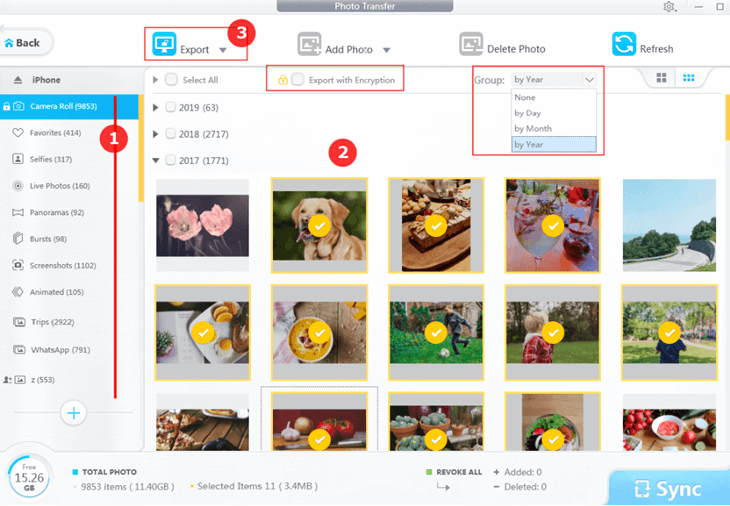
Compared with iCloud, it displays the photo albums the same as that on your iPhone, with cameral roll photos, favorites, bursts, live photos, long exposure, and user-created albums all showed up. You can select which to transfer, or transfer everything without losing quality, which is esp. good for large 48MP photos, HDR photos, and Apple ProRAW photos from iPhone.
To get started, install DearMob iPhone Manager, and follow 3 steps:
Step 1: Launch DearMob iPhone Manager for Mac, and connect your iPhone to Mac with USB cable.

Step 2: Go to Photos from DearMob home screen. Click on an album, select all the photos inside and click Export.
• When it's done, your photos within that album are copied on Mac, and you can see them in folders via Finder.
• You can create new folder in Finder, and drag photos into the folder.
Note: For your convenience, photos stored in the Hidden album will not show up in Camera Roll. Therefore, you can export every photo in 1-click from the camera roll, without worrying about sensitive photos being exported, since the photos you choose to are stored in a separate album.
Step 3: Repeat Step 2 to move other albums from iPhone to your computer.
By transferring photo albums to Mac, you can back up iPhone photos flexibly and stay assured that there's always a copy on your computer.
FAQ:
1. Will the photos be compressed upon transferring?
No, your photos will be copied to Mac at original resolution; there is no quality loss at all.
2. Can I transfer photos at once (10,000 pieces for instance)?
Yes. If you prefer to transfer all photos from camera roll, you can select all for batch transferring. DearMob is stable and efficient to transfer large quantities of photos.
3. After I transferred photo albums from iPhone to Mac, will photos on iPhone get deleted?
No, unless you choose to delete photos. In this way, the App guarantees no photo will be accidentally erased, and you can rest assured.
Method 3: Import Photos Albums from iPhone to Mac using Cable & Photos App
Make sure your iPhone is turned on, unlocked, and won't auto lock for some time: some users might set an Auto-Lock for 30 seconds, which may interrupt data transferring.
Prevent short time auto-lock:
Go to Settings > Display & Brightness > Auto-Lock. Set a longer time or tap Never.
Step 1: Launch Photos app on Mac, and USB-connect your iPhone.
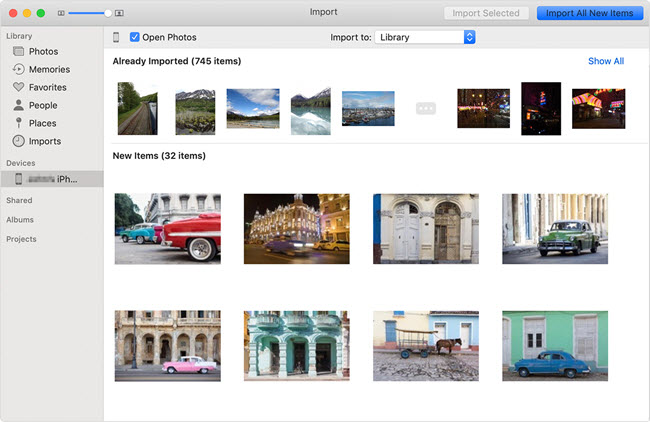
Step 2: Click your device name, select photos and do one of the following.
- • Import to Library: your photos will be transferred to Imports folder on the sidebar.
- • Import to Album or New Album: iPhone photos will be imported into an album you designate.
Step 3: Use smart album to manage imports.
Important notes to the album structure:
Actually, you cannot sync your existing iPhone albums to your Mac using a cable and the Mac Photos app.
When you connect your phone via USB, the Mac treats your iPhone like a digital camera. The Mac's Photos app only sees a flat, massive stream of your raw photos and videos. It completely ignores the albums, folders, or organization you created on your phone.
You will have to manually recreate the folder structure on your Mac, manually select the photos for each specific album, and repeat that entire sequence for every single album you want to transfer. As with the previous steps, it is a very tedious, manual process, rather than an automated process like those found in professional iOS backup software.
Method 4: Use Shared Album to Move iPhone Photos to Mac
Instead of logging into iCloud.com to download photos albums, you can also enable iCloud photo library in Mac photos App, and set up shared album on iPhone too. By doing so, your shared albums will keep synchronizing from iPhone to Mac.
Step 1: On iPhone, enable shared album, and add photos in it.
Step 2: On Mac, Go to Settings > iCloud > iCloud Photo Sharing, toggle it on.
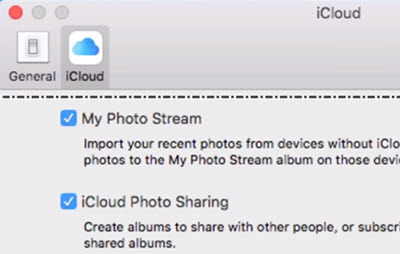
Step 3: Click share album at sidebar from Mac photos App, and wait till the syncing is completed.
FAQ:
1. Is there any limitation of photo numbers in shared album?
• According to Apple Support, the numbers of photos you can upload are: 1,000 per hour and 10,000 per day.
• However, a Shared Album can hold up to 5000 photos, so that you need to create multiple shared albums if your pictures exceed 5000 pieces.
2. Do Photos in shared album take up storage space?
Apple Support claims that Photos in your Shared Albums are stored in iCloud, but they don't count against your iCloud storage limit.
Method 5: Transfer Photo Albums from iPhone to Mac Wirelessly using AirDrop
If you only need to move a specific album or a handful of photos quickly, AirDrop is also a good choice. The Mac will automatically import the photos and recreate that exact album name inside your Mac's Photos app.
However, since AirDrop relies on a combination of Wi-Fi and Bluetooth, transferring thousands of high-resolution photos at once can cause the transfer to freeze, time out, or fail.
Therefore, it is best to keep batches to under 200–300 photos at a time, or use a dedicated iPhone photo backup tool for large batches.
Download Free Trial with full features of DearMob iPhone Manager for Windows and Mac: